Rockery Wall vs. Retaining Wall: What Rock Landscapers Want Homeowners to Know
When homeowners start planning a sloped yard, raised garden, erosion-control project, or outdoor renovation, one of the first questions they often ask is whether they need a rockery wall or a retaining wall. Experienced Rock Landscapers know that these two wall types can look similar from a distance, but they are not always built for the same purpose. The right choice depends on your property’s slope, soil conditions, drainage needs, available space, desired appearance, and the amount of soil the wall must support.
Understanding the difference before construction begins can help you choose a wall that looks natural, performs correctly, and fits the long-term needs of your landscape.
What Is a Rockery Wall?
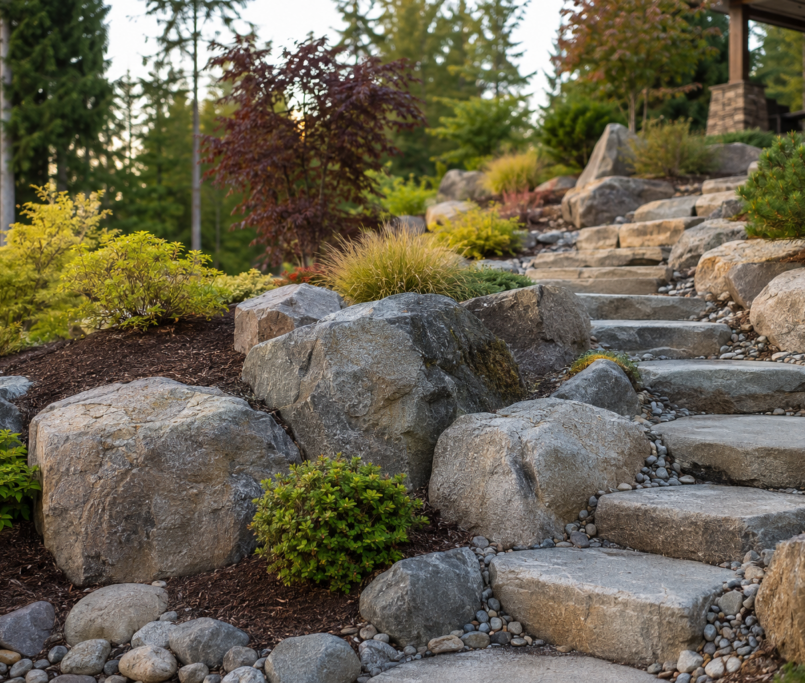
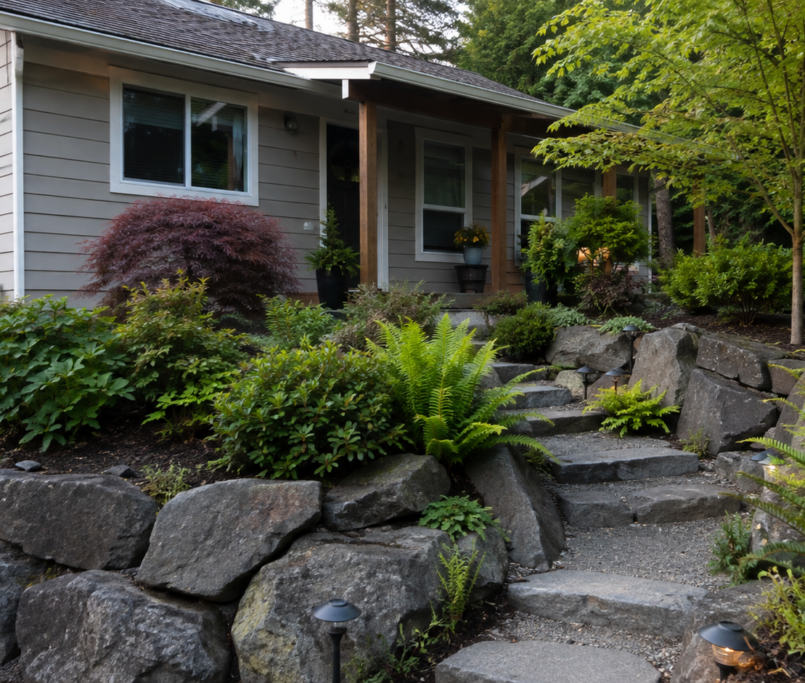
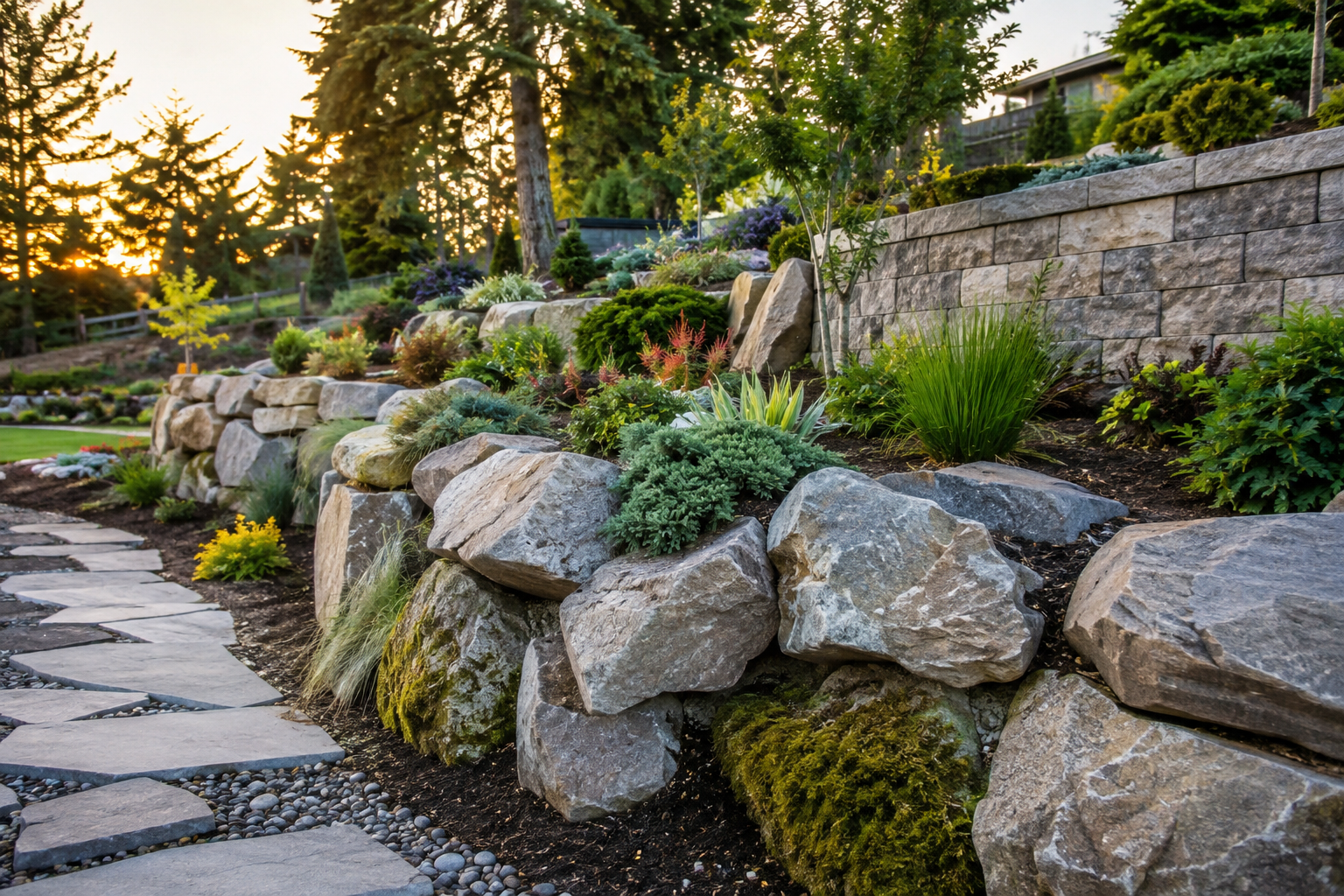
A rockery wall is a landscape wall built primarily with large natural stones or Landscape Boulders. The stones are carefully selected and positioned so their weight, shape, and placement help stabilize a slope or create a raised landscape feature.
Unlike manufactured block walls, rockery walls have a more natural and organic appearance. Each stone is different, which allows the finished wall to blend into gardens, wooded properties, Pacific Northwest landscapes, and outdoor spaces where homeowners want a rugged but polished look.
Rockery walls are commonly used for:
-
Stabilizing small to moderate slopes
-
Creating terraced planting areas
-
Defining garden beds
-
Adding dimension to a flat yard
-
Building natural-looking property borders
-
Improving drainage across a hillside
-
Creating usable space on an uneven property
-
Adding visual interest with plants, stone, and elevation changes
A skilled Rockery Contractor does more than stack rocks. The contractor evaluates the slope, prepares the base, selects appropriately sized stones, and positions each boulder so the wall is stable and visually balanced.
What Is a Retaining Wall?
A retaining wall is a structure designed to hold back soil and manage changes in ground elevation. While some retaining walls are built from natural stone, they can also be constructed from concrete blocks, poured concrete, timber, brick, or other engineered materials.
The main purpose of Retaining Walls is structural support. They are often used when a property has a steep grade, significant soil pressure, limited installation space, or a need for a more uniform wall shape.
Retaining walls are commonly used for:
-
Supporting steep slopes
-
Protecting foundations or driveways
-
Creating level patios or lawn areas
-
Preventing soil movement
-
Managing erosion
-
Building terraces
-
Supporting walkways and outdoor living areas
-
Controlling elevation changes near property improvements
Because retaining walls may support a large amount of soil, proper excavation, drainage, reinforcement, and foundation preparation are important. Depending on the wall’s height, location, and purpose, engineering or local permitting requirements may also apply.
The Main Difference Between a Rockery Wall and a Retaining Wall
The biggest difference is how the wall is designed and what it is expected to do.
A rockery wall uses the natural weight and placement of large rocks to stabilize a slope while creating a more natural landscape feature. A retaining wall is generally designed as a structural system that resists soil pressure and creates a controlled change in elevation.
Some rockery walls can function as retaining structures, and some retaining walls can be built with natural rock. This is why the terms are sometimes used interchangeably. However, not every decorative rock wall is intended to retain a large amount of soil, and not every retaining wall is designed to look like a natural rockery.
The best way to determine which option is appropriate is to have experienced Rock Landscapers evaluate the property in person.
Appearance and Design Style
Rockery walls are popular because they feel like a natural part of the landscape. The variation in stone size, color, shape, and texture can create a custom look that manufactured materials cannot always duplicate.
They also pair well with native plants, shrubs, groundcover, ornamental grasses, water features, and other forms of Rock Landscaping.
Traditional retaining walls often have a cleaner and more uniform appearance. Interlocking block walls, for example, create consistent lines and repeated patterns. This can work well for modern homes, formal gardens, patios, driveways, and properties where the homeowner wants a more structured look.
Homeowners who prefer a natural Pacific Northwest design often choose rockery walls. Those who want a precise, symmetrical, or space-efficient structure may prefer a traditional retaining wall.
How the Construction Process Differs
The installation process for each wall depends on the site, but there are some general differences.
Rockery Wall Construction
Rock Wall Construction typically begins with excavation and base preparation. Large boulders are then placed one at a time, usually with heavy equipment. The installer must consider the weight, shape, contact points, and angle of each stone.
The lower rocks usually serve as the wall’s foundation, while upper stones are positioned to create a stable slope and finished appearance. Drainage material may be installed behind the wall to reduce water buildup and help manage runoff.
Successful rock wall construction requires experience. A qualified Rock Wall Contractor understands how to select and place each stone so the wall does not simply look good on installation day, but continues to perform as the landscape settles and changes.
Retaining Wall Construction
Retaining wall construction usually follows a more standardized system. The process may include excavation, compacted base material, drainage rock, perforated drainpipe, reinforcement, and precisely installed wall units.
Depending on the height and design, the wall may also require geogrid, concrete footings, steel reinforcement, or engineered specifications.
While both wall types need thoughtful preparation, traditional retaining walls often rely more heavily on a defined structural system. Rockery walls rely on the size, weight, placement, and interaction of natural stones.
Drainage Matters for Both Wall Types
Water is one of the most important factors in any slope or wall project. When water collects behind a wall, it can increase soil pressure, wash away supporting material, and contribute to movement over time.
Proper drainage may include:
-
Free-draining gravel behind the wall
-
Drainpipe
-
Filter fabric
-
Grading that directs water away from the wall
-
Openings or pathways for water to escape
-
Downspout or runoff management
A professional Rock Landscaper will look at more than the wall itself. They will consider where water comes from, how it moves across the property, and where it should safely drain after construction.
This is especially important in Western Washington, where long periods of rain can expose weaknesses in poorly planned walls.
Which Wall Uses More Space?
Rockery walls often require more horizontal space than vertical retaining walls. Large boulders need room to sit securely, and the wall may lean back into the slope rather than rise straight upward.
A traditional retaining wall can sometimes create a more vertical face, which may be useful on smaller properties or near patios, driveways, walkways, and property boundaries.
For homeowners with a large sloped yard, a rockery wall may create a beautiful transition between elevations. For homeowners with limited space, a narrower retaining wall system may preserve more usable square footage.
Which Option Is Better for Landscaping?
For many homeowners, the decision comes down to the balance between structural needs and visual goals.
Rockery walls may be a strong choice when you want:
-
A natural appearance
-
Large boulders as a design feature
-
Planting pockets between stones
-
A wall that blends into the surrounding landscape
-
Terraced gardens
-
A rugged Pacific Northwest style
Traditional retaining walls may be a better choice when you want:
-
A uniform wall surface
-
A straighter or more vertical structure
-
Maximum usable space
-
A formal or modern design
-
A wall system built to specific structural requirements
In many projects, the best result combines both approaches. For example, a structural retaining wall may support a patio while natural Rock Walls and boulders are used elsewhere to soften the landscape.
Can Rockery Walls Include Plants?
One of the biggest design advantages of rockery walls is the ability to incorporate plants into the wall.
Small planting pockets can be created between stones for groundcover, trailing plants, ornamental grasses, or drought-tolerant varieties. As the plants grow, they soften the edges of the rock and help the wall feel established.
This style of Rock Wall Landscaping can be especially effective in sloped gardens where homeowners want structure without making the yard feel overly manufactured.
Plant selection should consider sunlight, soil depth, drainage, mature plant size, and maintenance needs. Plants should enhance the wall without hiding important areas that may need future inspection.
What Affects the Cost?
The cost of a rockery wall or retaining wall depends on more than the visible wall material.
Common cost factors include:
-
Wall height and length
-
Slope steepness
-
Soil conditions
-
Amount of excavation
-
Equipment access
-
Boulder size
-
Material delivery
-
Drainage requirements
-
Removal of existing walls or vegetation
-
Engineering or permits
-
Site cleanup
-
Planting and landscape restoration
A rockery wall may require heavy equipment and carefully selected stone, while a retaining wall may require more manufactured materials, reinforcement, or detailed base preparation.
The lowest quote is not always the lowest long-term cost. Poorly installed Rockwalls can shift, settle, drain incorrectly, or require major repairs. Homeowners should compare the contractor’s experience, construction plan, drainage approach, materials, and understanding of the site.
When Should You Call a Professional?
Homeowners should consider professional help when a wall will support soil, protect a structure, sit near a property line, affect drainage, or require heavy materials.
Large landscape boulders can weigh hundreds or thousands of pounds. Safe installation requires the right equipment, access planning, and experience. A professional contractor can also identify potential issues that may not be obvious from the surface, such as loose fill soil, underground utilities, unstable slopes, concentrated runoff, or inadequate access.
A qualified contractor should be able to explain:
-
What type of wall is recommended
-
Why it fits the site
-
How drainage will be handled
-
What materials will be used
-
Whether permits or engineering may be needed
-
How the surrounding landscape will be restored
-
What maintenance the wall may require
Choosing Rock Landscapers in the Puget Sound Area
Properties across the Puget Sound Area can vary significantly in elevation, soil, access, drainage, and lot size. A wall that works well on one property may not be appropriate for another only a few miles away.
Homeowners in Seattle, Tacoma, Sumner, Bonney Lake, Edgewood, Puyallup, Auburn, Renton, Kent, and Maple Valley should work with contractors who understand local landscapes and wet-weather drainage.
The right team will help you compare wall types, understand the tradeoffs, and choose a solution that supports both the property and the overall landscape design.
Frequently Asked Questions
Is a rockery wall the same as a retaining wall?
Not always. A rockery wall is built with large natural stones and may stabilize or retain a slope. A retaining wall is a broader structural category that includes walls made from natural stone, concrete blocks, poured concrete, timber, and other materials. Some rockery walls function as retaining walls, but the terms do not always describe the same type of construction.
Are rockery walls strong enough to hold back soil?
Rockery walls can hold back soil when they are properly designed and installed for the specific slope. Their performance depends on boulder size, placement, base preparation, drainage, soil conditions, and wall height. Larger or more complex walls may require additional design considerations.
Which wall looks more natural?
A rockery wall usually looks more natural because it uses real boulders with varied colors, textures, and shapes. It can also include planting pockets that help the wall blend into gardens and surrounding vegetation.
Do retaining walls need drainage?
Yes. Drainage is important for both retaining walls and rockery walls. Water buildup behind a wall can increase pressure and contribute to movement, erosion, or failure. The drainage approach should be planned as part of the original installation.
Is a rockery wall more expensive than a retaining wall?
It depends on the project. Boulder size, equipment access, excavation, material delivery, wall height, drainage, and site conditions all affect the price. A traditional retaining wall may also become more expensive when reinforcement, engineering, or specialty materials are needed.
How long does a rockery wall last?
A well-built rockery wall can remain functional for many years. Longevity depends on proper construction, stable soil, effective drainage, quality materials, and how the surrounding property is maintained.
Can a rockery wall be added to an existing yard?
Yes. Rockery walls can be added to existing landscapes to manage slopes, create terraces, define planting areas, or improve the appearance of a yard. The contractor will need to evaluate access for equipment, existing drainage, utilities, vegetation, and nearby structures.
Who should I hire to build a rockery wall?
Look for a contractor with specific experience in boulder placement, slope work, drainage, excavation, and rock wall construction. General landscaping experience alone may not be enough for a wall that must support soil or manage a difficult grade.
How do I get started with a rockery or retaining wall project?
Start with an on-site evaluation so the contractor can review the slope, access, drainage, soil, and design goals. To discuss your property and compare the best wall options, Request an Estimate from Olympic Rockery & Landscape Supply, LLC.