Rock Landscapers Reveal Rock Wall Landscaping Trends for Pacific Northwest Terrain
Pacific Northwest homeowners are turning to experienced Rock Landscapers to create outdoor spaces that look natural, handle wet weather, and make better use of sloped or uneven property. Instead of forcing a flat, overly formal design onto the land, today’s best rock wall projects work with the existing terrain. Natural stone, thoughtful drainage, layered planting, and carefully placed boulders can transform a difficult yard into a stable, functional, and beautiful landscape that feels like it belongs in the region.
The biggest trends are not only about appearance. Homeowners increasingly want landscapes that reduce maintenance, improve drainage, create usable outdoor areas, and hold up through changing seasons. Current outdoor design trends emphasize rainscaping, natural-looking retaining walls, native plants, reduced lawn areas, ecological planting, and organic materials that blend with the surrounding environment.
Natural Rockwalls That Follow the Existing Grade
One of the strongest design trends is moving away from rigid, perfectly uniform walls and toward Rockwalls that follow the natural contours of the property. This approach works especially well in the Pacific Northwest, where residential lots often include slopes, elevation changes, wooded edges, and irregular terrain.
Rather than making the wall look separate from the yard, a skilled contractor can use varied stone sizes, subtle curves, and staggered elevations to help the structure feel connected to the land. The result is a more organic appearance that resembles a natural rock outcropping instead of a manufactured barrier.
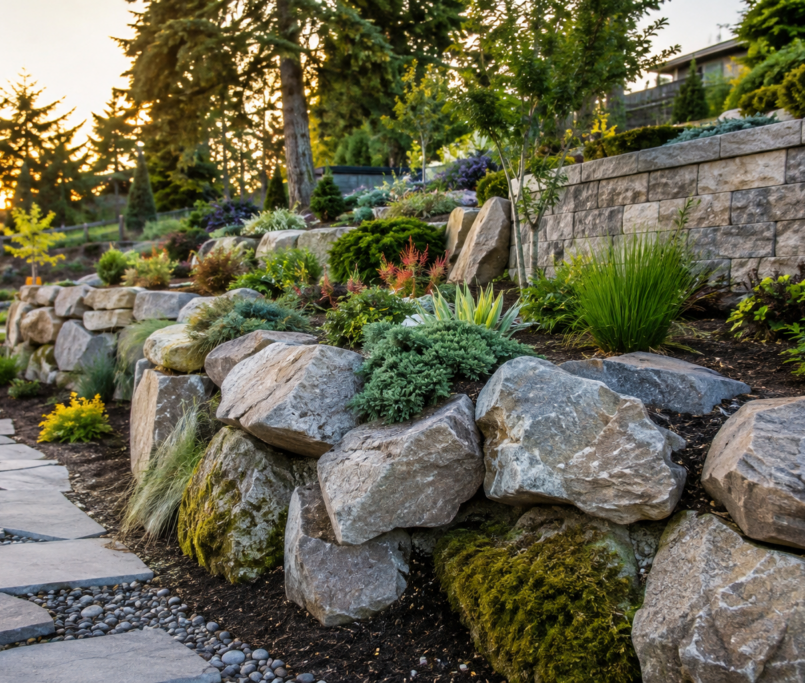
This trend can also make a large wall feel less visually heavy. Breaking one tall wall into smaller terraces creates depth and gives homeowners more opportunities to add plants, pathways, lighting, or seating areas between levels.
Terraced Rock Walls That Create Usable Outdoor Space
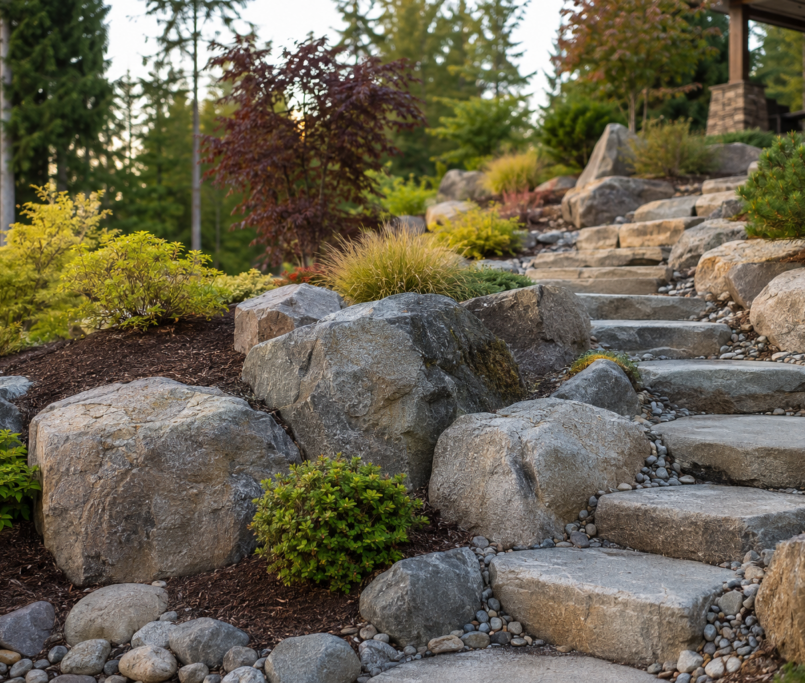
Terracing continues to be one of the most practical forms of Rock Landscaping for sloped properties. A steep yard may be difficult to mow, plant, walk through, or use for entertaining. Strategically placed Rock Walls can divide that slope into flatter, more manageable areas.
These terraces can become planting beds, garden spaces, small lawns, patios, fire pit areas, or pathways. For homeowners with limited level ground, terracing can help reclaim portions of the property that previously felt unusable.
The key is to plan each level as part of one connected design. Wall height, drainage, access, planting, and sightlines should all work together. A qualified Rockery Contractor can evaluate the slope and recommend a layout that improves both the function and appearance of the yard.
Drainage First Retaining Walls
In the Pacific Northwest, drainage is not an optional detail. It is one of the most important parts of successful Retaining Walls and long-lasting rockery projects. Water can collect behind a wall, increase soil pressure, wash away supporting material, and contribute to movement when drainage is poorly designed.
That is why modern projects increasingly treat drainage as part of the visible landscape instead of hiding it as an afterthought. Gravel beds, French drains, dry creek channels, permeable pathways, and planted drainage areas can help guide water while adding texture and visual interest.
Olympic Rockery notes that durable walls depend on proper footing, drainage, stone placement, and compaction, particularly in a region where soil moisture and seasonal movement place added pressure on structures.
A drainage-first plan is especially valuable on properties where runoff moves toward the house, water pools near patios, or slopes show signs of erosion. Before beginning Rock Wall Construction, homeowners should ask how water will move through and around the finished landscape.
Rainscaping With Stone and Dry Creek Beds
Rainscaping is becoming more popular because it turns stormwater management into an attractive landscape feature. Instead of allowing runoff to cut channels through soil or collect in low spots, homeowners can use stone-lined swales, dry creek beds, rain gardens, and drainage-friendly planting zones.
A dry creek bed can be designed with river rock, gravel, and larger accent boulders to imitate a natural stream channel. During heavy rain, it can help direct water through the yard. During dry weather, it remains an appealing part of the landscape.
This feature pairs naturally with rock walls because both elements can use similar colors and stone textures. When carefully planned, the drainage system looks intentional rather than purely functional.
Larger Landscape Boulders as Focal Points
Another growing trend is the use of Landscape Boulders as major design elements rather than small decorative accents. A few well-positioned boulders can create more impact than many scattered rocks, especially when they are partially set into the soil and grouped in natural-looking arrangements.
Large boulders can be used to anchor a planting bed, mark the entrance to a pathway, define the edge of a patio, or transition between two elevations. They can also help visually connect a new wall to existing trees, slopes, and garden areas.
The most natural installations avoid placing every boulder upright or evenly spaced. Variation in size, orientation, and depth makes the composition feel more realistic. A professional Rock Landscaper will also consider how the stones look from windows, driveways, patios, and other frequently viewed areas.
Native and Climate Appropriate Planting Around Rock Walls
Stone provides structure, but planting brings a rock landscape to life. Homeowners are increasingly pairing rock walls with native and climate-appropriate plants that fit the Pacific Northwest environment.
Ferns, groundcovers, ornamental grasses, compact shrubs, trailing plants, and small trees can soften the edges of a wall without hiding the stonework. Plants placed between terraces can create layers of texture and seasonal color. Creeping plants can spill gently over selected sections, while upright plants can add height behind the wall.
Current landscape design trends favor naturalistic planting, ecological sensitivity, pollinator support, and year-round visual interest. For homeowners, this can mean a yard that feels fuller and more established while requiring less mowing and fewer high-maintenance formal beds.
Plant selection should still account for sunlight, drainage, mature size, and root growth. The goal is to complement the wall without creating future maintenance problems or blocking important drainage areas.
Integrated Steps and Pathways
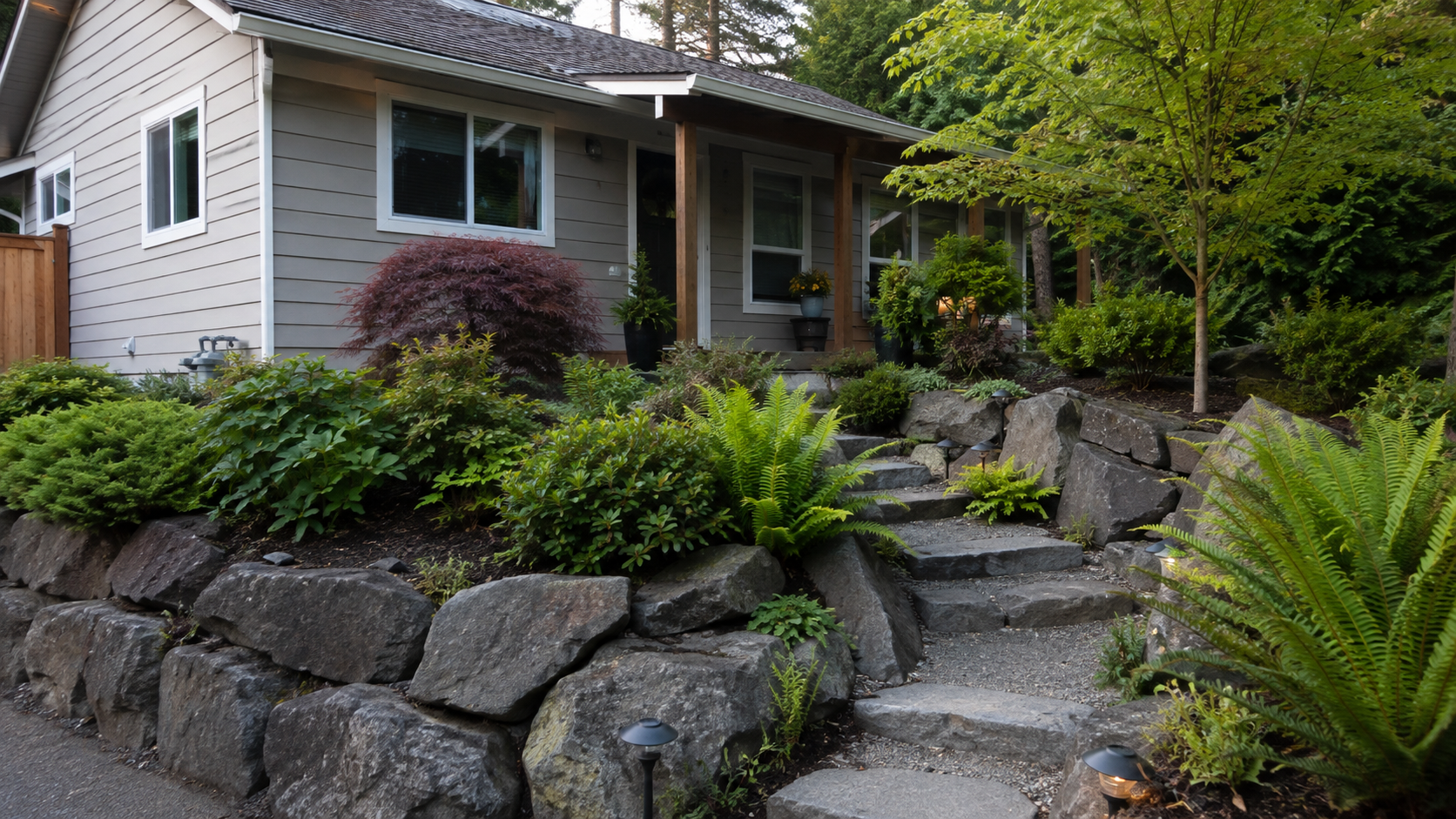
Rock walls are increasingly being designed with access in mind. Instead of building the wall first and adding a path later, homeowners are integrating stone steps, gravel walkways, and connecting paths into the original plan.
This can make the yard easier to navigate while creating a more cohesive look. Steps can connect a lower patio to an upper garden, provide access to a side yard, or create a clear route through a terraced slope.
Natural stone steps are especially effective when their color and texture coordinate with the surrounding walls and boulders. The dimensions should feel comfortable and consistent, and the pathway should be designed to shed water safely rather than becoming slippery or washed out.
Lower Maintenance Landscapes With Less Lawn
Many homeowners are reducing lawn areas and replacing them with rock features, planting beds, gravel paths, and outdoor living spaces. This does not mean covering the entire yard with stone. The trend is about using each area more intentionally.
A steep section that is difficult to mow might become a terraced rock garden. A muddy side yard might become a compacted gravel path. An unused lawn corner might become a boulder-framed seating area or fire pit zone.
This style of Rock Wall Landscaping can reduce repetitive maintenance while giving the property more texture and year-round structure. Stone also provides visual interest during winter when many plants lose foliage.
Outdoor Living Areas Built Into the Terrain
Rather than placing a patio in the middle of the yard and treating the slope as a separate problem, homeowners are using rock walls to frame outdoor living areas. A wall can create a protected edge around a patio, define a fire pit area, provide informal seating, or form the backdrop for an outdoor kitchen.
This is especially useful on smaller or sloped lots where every square foot matters. A carefully planned wall can support the grade while also making the space feel enclosed and comfortable.
For a softer look, homeowners can combine natural stone with wood, gravel, native plants, subtle lighting, and water features. Olympic Rockery’s current services and materials include rock walls, boulders, retaining walls, pathways, water features, patios, excavation, drainage solutions, gravel, dry stack rock, and other landscape materials that can be combined into a complete outdoor plan.
Subtle Lighting That Highlights Stone Texture
Landscape lighting is shifting toward subtle, targeted illumination. Instead of flooding the entire yard with bright light, small fixtures can highlight the texture of boulders, illuminate steps, and wash warm light across selected portions of a wall.
Low-voltage lighting can improve safety while making the landscape enjoyable after sunset. The best results usually come from lighting only a few important areas and allowing some shadows to remain. This helps preserve the natural character of the stone and prevents the yard from feeling overly commercial.
Lighting should be considered during the planning stage so wiring, fixture locations, and access can be integrated without disturbing the finished wall later.
Choosing Materials That Match the Home and Surroundings
Pacific Northwest rock projects often look best when the stone color and texture relate to the home, nearby trees, existing soil, and surrounding landscape. Gray, charcoal, brown, mossy, and mixed natural tones can work well, but the right choice depends on the property.
A modern home may benefit from cleaner lines and larger, more consistent stone. A wooded or rustic property may look better with irregular boulders, varied textures, and a looser wall pattern. The goal is not to follow a trend blindly. It is to choose a style that feels current while still fitting the home for many years.
Visiting a landscape supply yard and viewing full-size materials can help homeowners understand how different stones will look outdoors. Small samples do not always show the variation, scale, or texture that becomes visible in a completed wall.
Professional Planning for Challenging Pacific Northwest Terrain
A beautiful rock wall begins with more than choosing attractive stone. The contractor must evaluate access, slope, soil, drainage, wall purpose, nearby structures, utilities, and how equipment will move through the property.
An experienced Rock Wall Contractor can determine whether the project is primarily decorative or whether it must retain soil and manage significant pressure. That distinction affects excavation, base preparation, drainage, boulder selection, and construction methods.
Homeowners searching for Rock Landscapers should ask to see completed projects that are similar in height, slope, and purpose. They should also ask how the contractor plans to manage drainage, prepare the base, select stone sizes, and protect nearby landscaping.
The right design should look natural, but the construction behind it needs to be deliberate. Good rock work is a blend of artistry, equipment skill, site planning, and practical knowledge of how water and soil behave.
Rock Wall Landscaping Across the Puget Sound Area
These trends can be adapted to many property types throughout the Puget Sound Area. Urban homes in Seattle may need compact walls that maximize limited yard space, while properties in Tacoma, Sumner, and Puyallup may have larger slopes or open areas suited for terracing and boulder placement.
Homes in Bonney Lake, Edgewood, Auburn, Renton, Kent, and Maple Valley can also benefit from designs that address elevation changes, wet areas, erosion, and outdoor living needs. Every property is different, so the best trend is always the one adapted to the actual terrain rather than copied from a generic photo.
Frequently Asked Questions About Rock Wall Landscaping
What is the best rock wall style for Pacific Northwest terrain?
The best style usually follows the natural grade, includes proper drainage, and uses stone sizes that match the scale of the property. Terraced walls often work well on steep slopes because they distribute elevation changes across multiple levels.
Do rock walls need drainage behind them?
Yes. Walls that retain soil generally need a drainage plan to reduce water buildup and pressure. The exact system may include gravel, drainpipe, filter fabric, weep areas, grading, or additional drainage features based on the site.
Are natural boulder walls good for sloped yards?
Natural boulder walls can be an excellent choice for sloped yards when they are properly designed and installed. They can stabilize grade changes, create planting terraces, and blend naturally with wooded or irregular terrain.
How long does rock wall construction take?
The timeline depends on wall size, site access, excavation needs, drainage work, material availability, and weather. A contractor should inspect the property before providing a realistic project schedule.
Can rock walls be combined with patios and pathways?
Yes. Rock walls can frame patios, support elevated outdoor areas, border pathways, integrate steps, and create transitions between different parts of the yard. Planning these features together usually creates a more cohesive result.
How do I choose the right rockery contractor?
Look for a contractor with experience in structural rock work, drainage, excavation, equipment operation, and projects similar to yours. Ask about base preparation, water management, material selection, access, and examples of completed work.
Who provides professional rock wall landscaping in the Puget Sound region?
For natural rock walls, boulder placement, retaining solutions, drainage improvements, and complete landscape construction, contact Olympic Rockery & Landscape Supply, LLC and Request an Estimate for a project designed around your property, terrain, and outdoor goals.