Landscape Boulder Size Guide: How Rock Landscapers Choose the Right Rocks for Your Yard
Choosing the right boulders for your yard is not as simple as picking the stones that look best at the supply yard. Experienced Rock Landscapers consider the size of your home, the available landscape space, the purpose of the rocks, drainage, slope conditions, equipment access, and how much of each boulder will be buried during installation. A rock that looks enormous when viewed up close can appear surprisingly small once it is placed beside a two-story home, wide driveway, mature evergreen, or large backyard.
The right boulders can make a landscape look established, natural, and thoughtfully designed. They can anchor planting beds, create visual interest, support a slope, frame a water feature, or become part of functional Rockwalls and retaining structures. The wrong size can make the yard feel crowded, underwhelming, or disconnected from the architecture of the home.
This guide explains the most common landscape boulder sizes, where they work best, and what homeowners should consider before beginning a boulder or Rock Landscaping project.
Why Landscape Boulder Size Matters
Boulders create visual weight in a landscape. Even one large stone can change the way nearby plants, lawn areas, pathways, patios, and garden beds feel.
A properly sized boulder can become a natural focal point. It can also make smaller plants and decorative materials feel more intentional. When the rock is too small, however, it may disappear into the landscape once shrubs and groundcover begin to mature.
Boulder size also affects function. A decorative stone placed beside a garden bed does not need to meet the same requirements as stones used in Retaining Walls or Rock Wall Construction. Structural installations require careful consideration of soil pressure, slope, drainage, base preparation, and how the stones fit together.
Another important factor is how much of the rock will remain visible. Professional installers normally set part of a boulder below the finished grade. This improves stability and makes the stone appear as though it naturally emerged from the ground.
Because part of the boulder may be buried, homeowners often need a larger stone than they initially expect.
Small Landscape Boulders
Small Landscape Boulders are generally between 12 and 18 inches in diameter. The exact measurement will vary because natural stone rarely has a perfectly round or consistent shape.
Small boulders are well suited for compact gardens, narrow planting beds, walkway borders, mailbox areas, and smaller yards. They add texture and dimension without overwhelming the surrounding landscape.
Common uses include:
Accenting flower beds
Defining walkways
Creating small rock gardens
Framing ornamental grasses
Decorating dry creek beds
Supporting shallow grade transitions
Adding detail around water features
Filling spaces around larger stones
Small rocks usually look more natural when they are arranged in groups instead of placed individually throughout the yard. A group of three or five stones in slightly different sizes can create a more organic appearance.
These stones can also help blend larger boulders into the surrounding landscape. Placing smaller companion rocks around a dominant boulder creates a smoother transition between stone, soil, mulch, gravel, and plants.
Medium Landscape Boulders
Medium boulders are commonly between 18 and 30 inches in diameter. This is one of the most popular size ranges for residential Rock Landscaping because the stones are large enough to make an impact without overwhelming most yards.
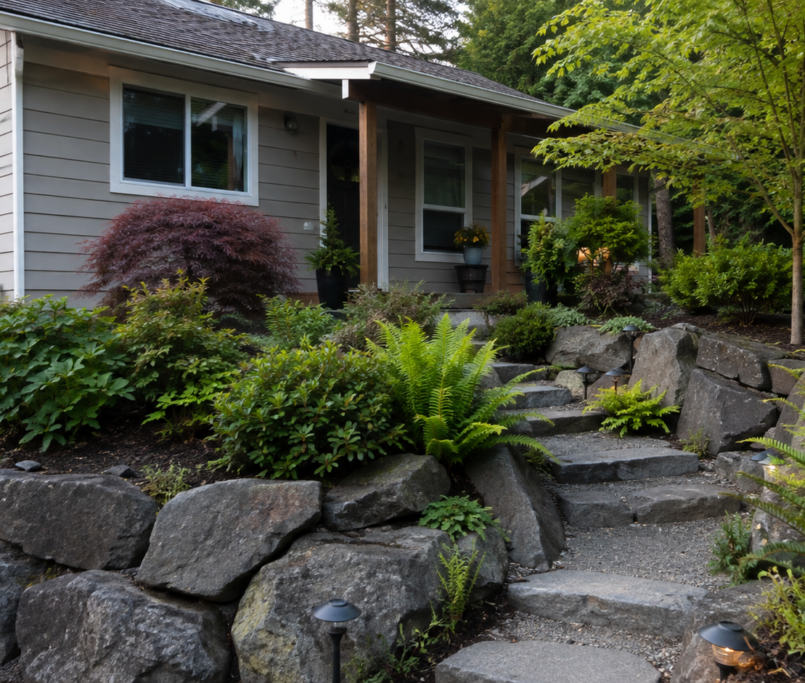
Medium boulders work well for garden focal points, raised planting areas, dry creek beds, low Rock Walls, water feature borders, natural seating accents, and transitions between lawns and landscaped beds.
For many properties, medium stones provide a good balance between appearance and practicality. They can hold their own beside shrubs and smaller trees while still fitting comfortably into residential gardens.
Medium rocks also work well as companion stones around a larger feature boulder. Using several sizes together helps the finished design feel more natural than repeating identical rocks across the property.
Keep in mind that part of the stone may be buried. A 24-inch boulder may only show 16 to 18 inches above the finished soil level, depending on its shape and installation angle.
Large Landscape Boulders
Large boulders generally measure between 30 and 48 inches in diameter. Depending on the shape and stone type, they may weigh hundreds or even thousands of pounds.
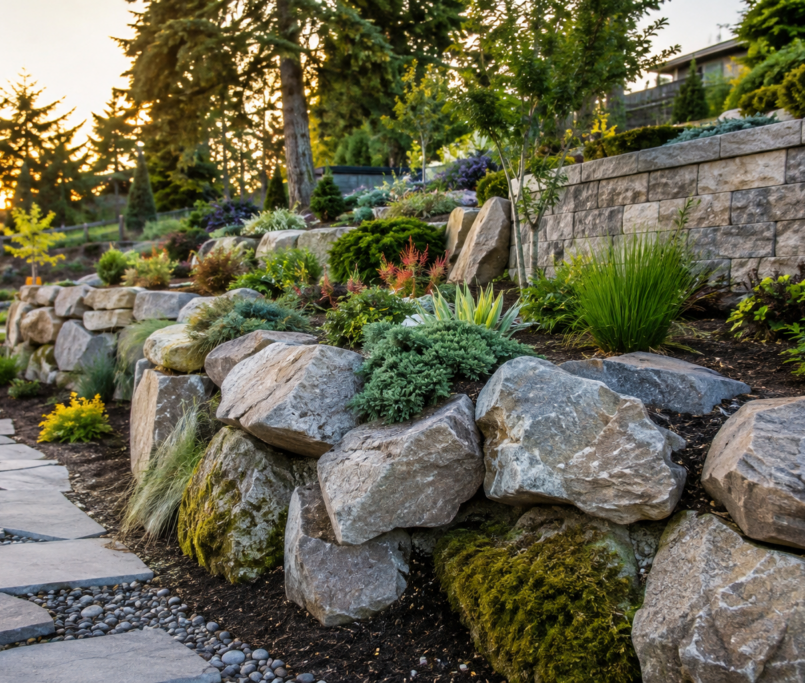
These boulders are often used for major landscape focal points, hillside stabilization, large water features, property entrances, natural barriers, boulder terraces, structural Rockwalls, and larger Retaining Walls.
Large stones are especially effective on properties with wide yards, tall homes, mature trees, or significant elevation changes. They provide enough visual weight to connect the landscape design with the scale of the home.
A medium boulder may look substantial from a few feet away but disappear when viewed from the street or across a large backyard. Large boulders are easier to see from a distance and can become strong visual anchors.
Installation requires careful planning. A Rockery Contractor must consider the delivery route, equipment access, underground utilities, gates, fences, tree branches, nearby buildings, overhead wires, soft soil, and the amount of space needed to maneuver machinery.
The boulder must not only fit the design. It must also be able to reach the installation area safely.
Extra-Large Feature Boulders
Extra-large boulders can measure four feet or more across. These stones are typically used as statement pieces or structural components in larger landscape projects.
They may be used for entrance monuments, waterfall features, large hillside rockeries, natural seating areas, substantial Rock Walls, or dramatic garden focal points.
Moving an extra-large boulder requires heavy equipment and an experienced operator. However, lifting the rock is only part of the process.
The installer must also identify the most attractive display face, prepare a stable base, control the installation angle, and position the stone so it looks like a natural part of the property.
When large rocks are used in Rock Wall Construction, bigger is not automatically better. The shape of the stones, contact points, base preparation, drainage, and placement pattern are all important.
A qualified Rock Wall Contractor evaluates the entire wall system instead of treating each boulder as an individual decorative object.
Match Boulder Size to Your Property
The right boulder size depends heavily on the scale of the home and yard.
A rock that looks impressive in a small courtyard may appear undersized on a large corner lot. Before selecting materials, compare the planned boulders with permanent features such as the home, driveway, patio, trees, pathways, and planting beds.
Consider the primary viewing areas as well. Will the stones mainly be viewed from the patio, the street, a second-story window, or inside the home?
A rock can look very different depending on the viewing distance. Professional Rock Landscapers often evaluate the yard from several angles before recommending a size.
Plant growth should also be considered. Newly planted shrubs and ornamental grasses may look small during the first year, but they can eventually grow around the stones and hide undersized boulders.
Planning for mature plant sizes helps ensure the boulders remain visible and balanced over time.
Match Boulder Size to Its Purpose
The intended purpose of the stone should guide the size selection.
Decorative Garden Accents
Small and medium boulders are usually appropriate for decorative garden accents. They can add contrast, texture, and visual interest without taking over the planting area.
A larger garden bed may look best with one dominant stone surrounded by smaller companion rocks. This creates a clear focal point and prevents the arrangement from feeling random.
Landscape Focal Points
A focal boulder should be large enough to draw attention from the main viewing area. If the rock will be viewed from the street or across a large yard, it may need to be larger than expected.
Plants can soften the edges and help the boulder blend into the landscape, but they should not completely hide the feature as they mature.
Slope Management
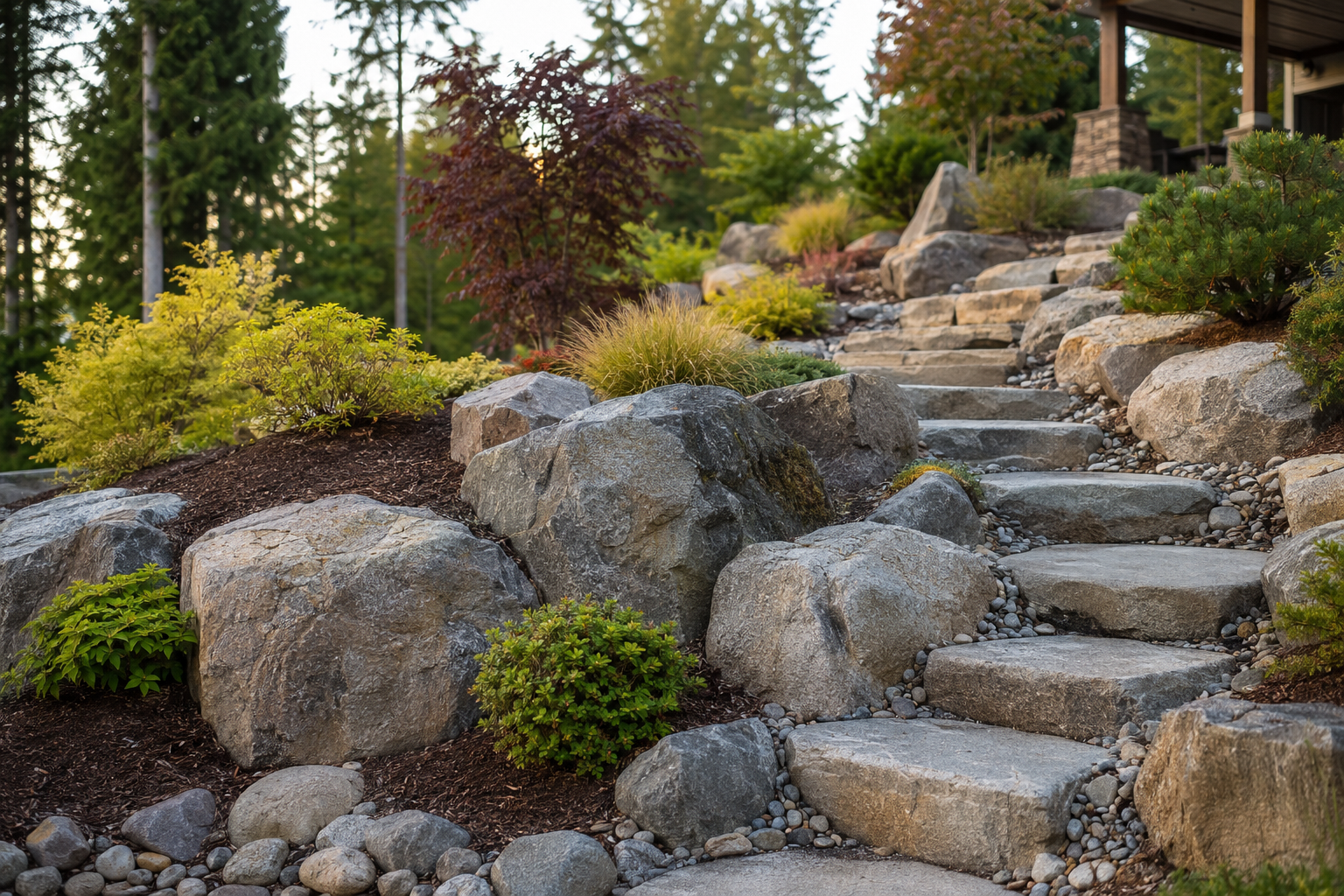
Boulders can be used to organize planting zones, terrace portions of a slope, reduce surface runoff, and create visual structure on uneven properties.
The size and placement must account for slope steepness, drainage, soil stability, and the amount of pressure the rocks may experience.
Decorative boulders and structural slope-support systems are not the same. A Rockery Contractor should evaluate steep or unstable areas before recommending an installation plan.
Rock Wall Landscaping
Rock Wall Landscaping can include decorative garden walls, terraced planting beds, hillside rockeries, and structural retaining systems.
The correct boulder size depends on the wall height and its purpose. Larger base stones may be needed for stability, while medium stones can be used higher in the wall or around the edges.
Proper drainage is also important. Water building up behind a wall can create pressure and affect long-term performance.
Water Features
Waterfalls, ponds, and dry creek beds usually look best when several boulder sizes are combined.
Large stones create the main structure, medium rocks define the shape, and smaller stones help hide edges and create natural transitions.
Using only one boulder size can make the water feature look manufactured. Natural streams and shorelines usually contain a mixture of large stones, medium rocks, pebbles, and gravel.
Choose Shape as Carefully as Size
Shape can be just as important as the overall dimensions of the boulder.
Rounded rocks often work well in water features, dry creek beds, and softer garden designs. Angular stones can create a rugged appearance and may work well in Rockwalls or mountain-inspired landscapes.
Flat rocks may be suitable for steps, ledges, or seating areas. Tall stones can create strong vertical focal points.
A professional Rock Landscaper may rotate a stone several times before deciding on its final position. The goal is to find the best display face while creating a stable base.
A small change in angle can reveal more color, texture, and character. It can also help the stone relate more naturally to nearby plants and other boulders.
Select a Consistent Color and Material
Boulder color should complement the home, existing hardscape, soil, and surrounding landscape.
Popular choices include gray, charcoal, brown, tan, rust, and mixed natural tones. Every rock does not need to match perfectly, but the stones should feel like they belong in the same environment.
Too many unrelated colors and textures can make a landscape feel busy. A consistent material palette helps connect the boulders with pathways, patios, gravel areas, retaining features, and the exterior of the home.
It is helpful to view stones outdoors in natural lighting. Wetting the rock can reveal deeper colors and patterns that may become more noticeable during rainy weather or around a pond or waterfall.
Plan for Equipment Access
A boulder must be able to reach its final location.
Before purchasing large stones, consider gate widths, fences, narrow side yards, trees, overhead wires, soft lawns, septic systems, irrigation lines, nearby structures, and underground utilities.
Heavy boulders typically require an excavator, skid steer, crane, or other specialized machinery. The equipment needs enough space to approach the installation area, stabilize, rotate, and place the stone safely.
In some cases, access limitations may determine the maximum practical boulder size. Several medium stones may be a better option than one massive boulder if the property cannot accommodate larger equipment.
Evaluating access before purchasing materials can prevent installation delays, property damage, and unexpected costs.
Avoid Common Boulder Sizing Mistakes
One of the most common mistakes is choosing boulders that are too small. Homeowners often select stones based on how they look from a few feet away without considering the size of the home or the distance from which the landscape will usually be viewed.
Another mistake is choosing every rock in the same size and shape. Natural-looking installations normally include some variation.
Other common problems include placing boulders directly on top of the soil, ignoring drainage, blocking pathways, forgetting that part of the stone will be buried, and purchasing materials before developing a complete layout.
It is also important to avoid using decorative placement methods for structural applications. Boulders used to retain soil or support a slope require proper planning and installation.
Why Professional Boulder Installation Matters
Installing large boulders requires more than heavy equipment. It also requires design judgment and an understanding of soil, drainage, slopes, access, and stone placement.
Professional Rock Landscapers can help homeowners choose appropriate sizes, plan natural groupings, determine how much of each rock should be buried, evaluate equipment access, and coordinate the stones with plants and hardscape.
A contractor can also estimate how many boulders the project needs. It can be difficult to judge quantity while viewing individual stones at a landscape supply yard.
Creating a complete plan before delivery helps ensure every boulder supports the overall design.
Frequently Asked Questions About Landscape Boulder Sizes
What is the best boulder size for a residential yard?
For many residential yards, boulders between 18 and 36 inches provide a good balance between visual impact and available space. Smaller yards may benefit from stones between 12 and 24 inches, while larger properties may require boulders measuring 30 inches or more.
How much of a landscape boulder should be buried?
Many installations bury approximately one-quarter to one-third of the boulder. The correct depth depends on the shape, size, purpose, soil conditions, and stability requirements of the project.
How much does a landscape boulder weigh?
Boulder weight varies based on its size, shape, and stone density. A small boulder may weigh a few hundred pounds, while a large feature stone can weigh several thousand pounds.
Can landscape boulders be installed without heavy equipment?
Small stones may sometimes be moved with hand tools or compact equipment. Medium and large boulders usually require a skid steer, excavator, crane, or another type of machinery.
What boulder sizes are used for retaining walls?
The correct size depends on wall height, slope, soil pressure, drainage, and the overall design. Structural walls often use larger stones at the base with smaller stones placed above them.
Should all landscape boulders be the same size?
No. A mixture of sizes usually creates a more natural and visually interesting design. One dominant boulder with several smaller supporting stones often works well.
How many boulders should I use in my yard?
The number depends on the size of the yard and the purpose of the installation. Odd-numbered groupings such as three, five, or seven stones can create a natural appearance in decorative areas.
Can boulders help control erosion?
Boulders can help slow runoff, organize slopes, and support terraced areas when they are installed as part of a properly designed erosion-control or drainage plan.
What contractor should I hire to install boulders?
Look for a Rockery Contractor, Rock Landscaper, or Rock Wall Contractor with experience in heavy stone placement, grading, drainage, slope work, and equipment operation.
Is one large boulder better than several smaller rocks?
One large boulder creates a strong focal point, while several smaller rocks can cover more space and create a layered design. Many successful landscapes use one main boulder with several smaller companion stones.
Choosing the right boulders can make your yard feel more natural, functional, and complete. Homeowners throughout Seattle, Tacoma, Sumner, Bonney Lake, Edgewood, Puyallup, Auburn, Renton, Kent, Maple Valley, and the Puget Sound Area can rely on Olympic Rockery & Landscape Supply, LLC for help selecting, delivering, and installing Landscape Boulders that fit their property and project goals. Start planning your rockery or boulder project today and Request an Estimate.