
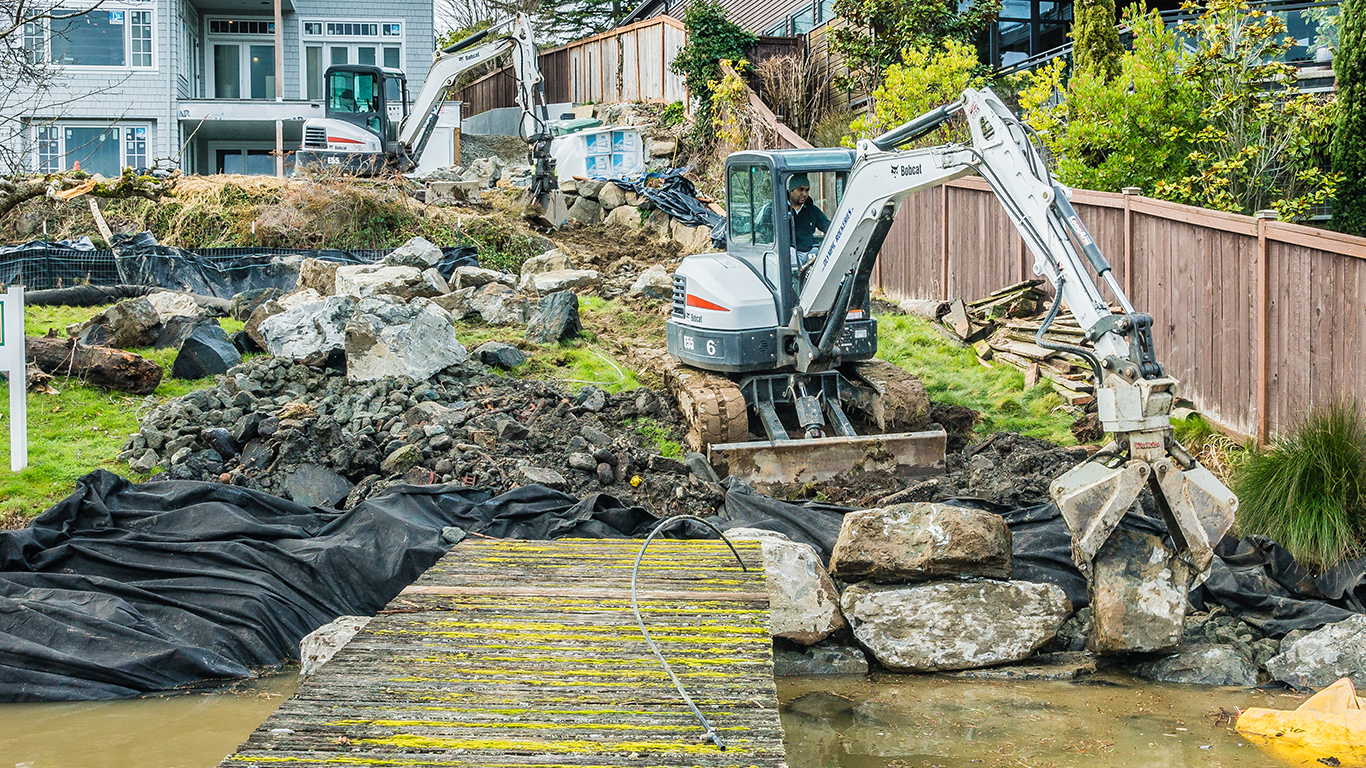
Rock Wall Contractor Tips – Signs of a Failing Rock Wall
If you have a rock wall on your property, chances are it serves more than just an aesthetic purpose because it provides vital structural support to your landscape. Over time, even the strongest rock walls can start to show signs of wear and deterioration, especially in the Pacific Northwest’s unpredictable weather. That’s why working with experienced Rock Wall Contractors is essential when it comes to repair, maintenance, or replacement. Whether you live in Seattle, Bellevue, Kirkland, or Redmond, understanding how to identify a failing rock wall and knowing when to call in the professionals can save you time, money, and potential damage to your property.
Why Rock Walls Fail
Rock walls, whether they’re built for decorative purposes, garden terracing, or structural retaining, are designed to withstand a variety of pressures. However, the unique conditions in the Puget Sound Area can accelerate wear and tear. Seattle and its surrounding cities experience heavy rainfall, frequent windstorms, and occasional freezing temperatures during the winter months. These environmental factors can cause soil to shift, water to infiltrate wall joints, and even frost heave when water freezes, expands, and pushes against the rocks from below. Over time, these stresses can lead to cracks, bulging, or even complete wall collapse.
The most common causes of rock wall failure include:
Poor drainage: When water builds up behind a wall, it exerts hydrostatic pressure that pushes outward, weakening the structure.
Improper construction: If a rock wall wasn’t built with the correct foundation or materials, it’s more prone to early deterioration.
Erosion and soil movement: Rainwater runoff and ground shifts can gradually wash away the soil supporting your wall.
Tree roots: Expanding roots can dislodge stones and disrupt the integrity of your wall.
Weathering: The constant cycle of wet and dry conditions in the Pacific Northwest can degrade mortar and loosen rock placements.
Signs Your Rock Wall May Be Failing
It’s easy to overlook small imperfections in your landscape, but early warning signs of rock wall issues shouldn’t be ignored. Here’s what to look for:
1. Bulging or Leaning:
If you notice that your wall is bowing outward or tilting, this is a clear indication of structural stress. It’s often caused by excessive water pressure or shifting soil.
2. Loose or Missing Stones:
Individual rocks coming loose or falling out is a warning that the internal structure is losing stability. This can worsen rapidly, especially after heavy rainfall.
3. Cracks or Gaps:
Cracks in the mortar joints or gaps between stones may seem minor, but they can allow water to seep in and cause further internal damage.
4. Erosion at the Base:
Soil washing away at the bottom of your wall can weaken its foundation. This is particularly common in sloped yards where drainage isn’t properly managed.
5. Pooling Water or Poor Drainage:
If you see water collecting behind or at the base of your wall after it rains, your drainage system may have failed. Standing water adds unnecessary weight and pressure.
6. Uneven Settling:
When one section of a rock wall appears to sink or settle differently than another, it can create uneven stress points that compromise the entire structure.
How Seattle’s Weather Makes Rock Wall Damage Worse
In areas like Seattle, where rain is a constant companion, moisture is the biggest enemy of rock walls. Continuous rainwater can erode soil, saturate backfill, and create significant hydrostatic pressure behind the wall. Without proper drainage systems in place, such as weep holes or gravel backfill, even a well-built wall can start to buckle or lean.
During winter, temperatures in the Puget Sound Area can dip below freezing, leading to frost heave, which occurs when moisture trapped in the soil expands as it freezes. This cycle pushes rocks out of alignment and weakens the wall’s stability. Strong winds, common during fall and winter storms, can further worsen the issue by drying out the exposed surfaces unevenly or toppling walls that are already compromised.
Even newer walls aren’t immune. Without the expertise of professional Rock Wall Contractors, shortcuts in construction or poor material choices can leave your wall vulnerable from the start. That’s why having your rock wall inspected regularly, especially after heavy rain or winter storms, is crucial.
The Importance of Professional Rock Wall Repair
When you start noticing signs of wall damage, it’s time to consider Rock Wall Repair from qualified experts. Attempting to fix a rock wall on your own can often lead to more harm than good, especially if you’re dealing with structural issues rather than surface-level wear.
Professional contractors will first assess the cause of the failure, not just the symptoms. They’ll evaluate soil stability, drainage systems, foundation depth, and the wall’s original construction method before recommending a solution. Depending on the severity, the repair process might include:
Rebuilding sections with new rock or improved footing
Installing proper drainage systems behind the wall
Repointing mortar or re-stacking shifted stones
Adding reinforcement for stability and longevity
Experienced Rock Wall Contractors understand the natural terrain and soil conditions in Seattle and surrounding areas. They know how to design and construct walls that can handle the Pacific Northwest’s wet climate while maintaining both beauty and strength.
When Replacement May Be the Best Option
Sometimes, repairing a failing rock wall isn’t enough, especially if it was poorly built to begin with or has suffered extensive damage over time. In these cases, a complete rebuild using modern Rock Wall Construction techniques may be the safer and more cost-effective route.
New construction allows contractors to install better drainage systems, use higher-quality materials, and incorporate design improvements that prevent future problems. For instance, properly graded backfill, geotextile fabric for filtration, and a strong gravel base can make a huge difference in how long your wall lasts.
An experienced contractor will also ensure your new rock wall complements your landscape, blending functionality with natural beauty. Whether you’re building a retaining wall to manage a sloped yard or creating a decorative boulder wall, investing in skilled craftsmanship pays off in long-term durability.
The Value of Hiring Local Experts
Choosing a local, trusted contractor makes all the difference. Professionals who live and work in the Puget Sound region understand how local weather, soil conditions, and building codes impact landscape structures. They’ll use materials that perform best in the area, such as granite or basalt, and apply installation methods proven to hold up against Seattle’s persistent rain and wind.
A professional inspection can also help identify underlying issues before they become costly problems. Addressing a leaning wall early on could mean a simple repair, while waiting too long might result in a full replacement.
Protect Your Investment with Expert Rock Wall Contractors
Your rock wall is more than a landscape feature; it’s an essential part of your property’s structure and visual appeal. By keeping an eye out for early warning signs and partnering with knowledgeable professionals for Rock Wall Repair or replacement, you can prevent major damage and extend the lifespan of your wall for decades.
If you live in Seattle, Bellevue, Kirkland, Redmond, or anywhere across the Puget Sound Area, and suspect your rock wall might be failing, don’t wait until it collapses. Contact Olympic Rockery & Landscape Supply, LLC for a professional assessment and expert craftsmanship you can trust.
Our team specializes in custom Rock Wall Construction, repair, and landscape solutions built to last through every season. Protect your property and restore your landscape’s beauty today by Requesting an Estimate.